Standard residential walls in La Jolla are 1/2-inch drywall, and ceilings are usually 5/8-inch; matching the correct thickness keeps the patch flush instead of leaving a ridge or dip. A doorknob hole, a TV-mount anchor…
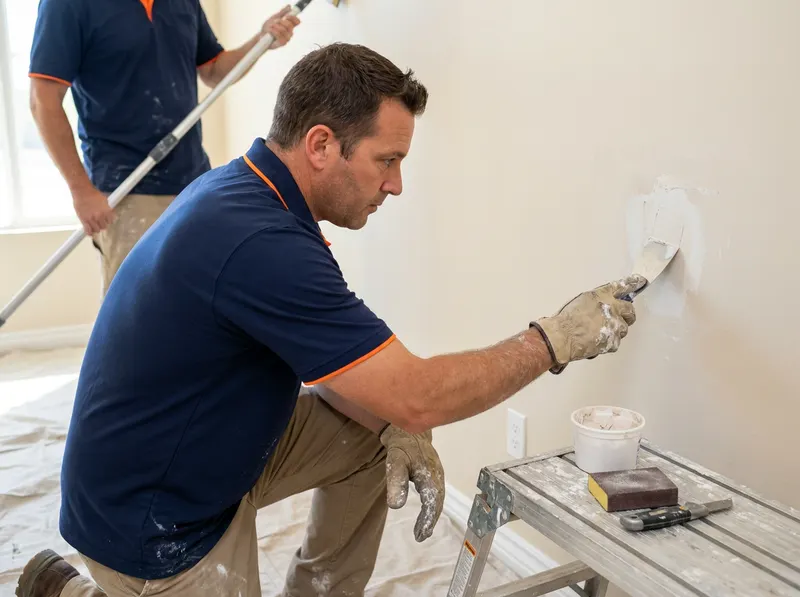
Standard residential walls in La Jolla are 1/2-inch drywall, and ceilings are usually 5/8-inch; matching the correct thickness keeps the patch flush instead of leaving a ridge or dip. A doorknob hole, a TV-mount anchor tear, or a hairline stress crack over a doorway in a Muirlands home is a same-visit fix using a mesh or California patch. A hole larger than about 6 inches needs a solid backing and a cut piece screwed to the studs, which is where drywall taping and finishing standards from the Gypsum Association matter: a proper Level 4 finish takes three thin compound coats with sanding between, not one heavy smear.
Water stains are the common repair near the coast. In La Jolla Shores and Windansea, marine humidity and the occasional roof or plumbing leak leave brown rings and soft, bubbling drywall. A stain that is dry and firm can be sealed with a stain-blocking primer and repainted; drywall that stays soft or crumbly has to be cut out and replaced, because painting over compromised board just hides the problem. When mold is visible on the paper facing, the EPA mold guidance notes that porous materials like drywall generally need removal rather than surface cleaning, and the underlying leak must be fixed first or the patch fails again. Older Country Club and La Jolla Alta homes sometimes have plaster over lath rather than drywall; those areas are patched with setting-type compound to bond to the existing surface.
Choosing the repair depends on what you can see. If the damage is a clean small hole with firm edges, a self-adhesive patch and skim coat is the fast, low-cost route. If you can push a finger through soft board, see sagging, or the hole spans a stud bay, a cut-and-replace section is the durable choice even though it adds a drying day. Textured ceilings and knockdown walls, common in Hidden Valley and Lower Hermosa builds, need the texture re-matched after mudding, which adds time; a smooth flat wall blends faster. The trade-off is simple: a skim patch is quicker and cheaper but only holds where the surrounding board is sound, while a full cutout costs more and takes longer yet restores strength.
The sequence is straightforward. First, the damaged area is squared off and any wet or crumbling board removed. Second, backing and a new drywall piece are fitted and screwed to framing. Third, joints are taped and coated with joint compound in successive layers. Fourth, the dried compound is sanded flush and dust wiped down. Fifth, the patch is primed so your topcoat color sits evenly. For paint color matching after larger repairs, painting the full wall corner-to-corner avoids a visible halo where fresh primer meets aged paint. Guidance from the Paint Quality Institute and USG's drywall resources both back priming before finish coat on any patched gypsum. For anchoring heavy items like shelves or a mounted TV after a repair, stud-finding and rated anchors follow the load ratings that hardware makers such as Toggler publish, and general jobsite dust and safety practices align with OSHA silica dust guidance since drywall sanding creates fine dust. Debris disposal follows local recycling and disposal options across San Diego County, and any suspected asbestos in pre-1980 joint compound is checked against EPA asbestos information before disturbing it.
Every job gets a firm, written price after a free on-site visit.
For standards, safe disposal, and service guidance on Handyman in La Jolla, CA, useful references include U.S. EPA, ENERGY STAR, U.S. Dept. of Energy, Consumer.gov, U.S. Census Bureau, and Google Maps. General consumer and small-business resources are available from USA.gov, Better Business Bureau, FTC Consumer Advice, U.S. Small Business Administration, and Ready.gov.
Tell us about your drywall patch & repair job in La Jolla and we'll send a clear, written quote, usually the same day.
 Handyman La Jolla